
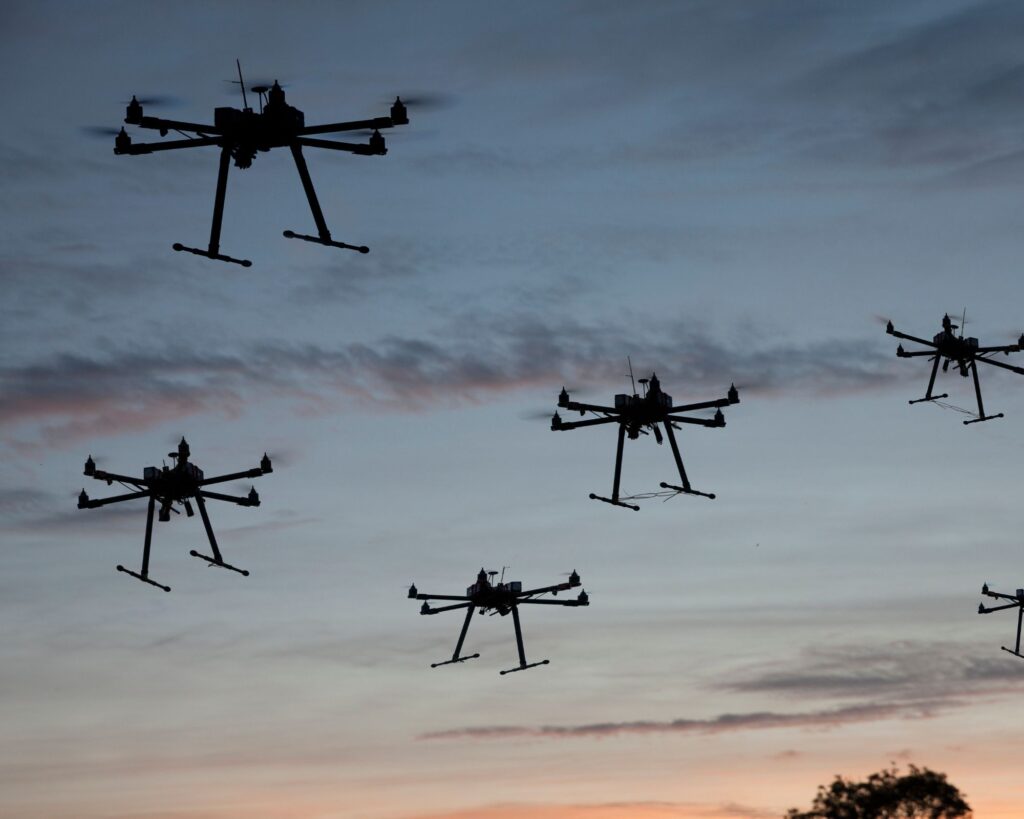
Unmanned aerial systems (UAS) are becoming an increasingly important part of modern security and military operations. While drones provide valuable capabilities for surveillance, reconnaissance, logistics and other missions, the same technology can create significant risks when used by hostile or unauthorised actors.
Across Africa, the increasing use of drones in security operations has made counter-unmanned aircraft systems (C-UAS) an important consideration for governments, military forces and law enforcement agencies.
The Changing Role of Drones
Drones have developed from relatively simple surveillance platforms into increasingly capable systems that can support a range of military and security activities.
For armed forces, unmanned systems can provide intelligence, surveillance and reconnaissance capabilities without placing personnel directly in harm’s way. They can also support target observation, communications and logistical operations.
At the same time, hostile groups can use commercially available or modified drones for surveillance and, in some cases, attacks. Recent incidents involving non-state actors in Africa demonstrate that the threat is no longer limited to conventional military environments.
This creates a requirement for security organisations to consider both the benefits of unmanned technology and the measures required to protect personnel and critical locations from unauthorised UAS activity.
What Is Counter-UAS?
Counter-UAS refers to technologies and systems designed to detect, identify, track and respond to unauthorised or hostile unmanned aircraft.
A C-UAS capability can involve several complementary technologies rather than a single piece of equipment. Depending on the operational requirement, these can include:
- Radar and other detection systems
- Radio-frequency detection
- Electro-optical and infrared sensors
- Electronic warfare capabilities
- Command and control systems
- Mitigation and interception technologies
The appropriate combination depends on the operating environment, the type of threat and the requirements of the organisation deploying the system.
Effective counter-drone protection therefore needs to be considered as part of a wider security architecture rather than as an isolated product.
Why C-UAS Matters in Africa
African security forces operate across a wide range of environments, from major urban centres and airports to remote border regions and military installations.
These different environments create different requirements for detecting and responding to drones. A system designed for protecting a fixed strategic facility may have different requirements from equipment intended for mobile military units.
The growing use of unmanned systems by African security forces also increases the importance of understanding the wider UAS environment. Nigeria, for example, has introduced dedicated C-UAS training as part of efforts to improve its ability to detect and counter hostile drones.
The issue is therefore not simply about acquiring anti-drone equipment. It also involves training, integration, maintenance, operational procedures and appropriate procurement.
Detection, Identification and Response
A successful C-UAS capability depends on being able to establish what is happening in the airspace before deciding how to respond.
Detection systems can identify the presence of an unmanned aircraft. Tracking capabilities can then provide information about its movement, while additional sensors can assist with identification.
Command and control systems can bring information together and support decision-making.
The final response will depend on the circumstances and the technology available. Electronic countermeasures are one possible element, while other systems may provide physical interception or other forms of mitigation.
This layered approach is important because no single technology is necessarily suitable for every drone, environment or operational requirement. Research into C-UAS technologies identifies detection, tracking and mitigation as distinct but connected elements of an effective counter-drone capability.
Procurement Requires More Than Technology
For governments and authorised defence suppliers, C-UAS procurement involves more than selecting a technical solution.
Important considerations include:
- Operational requirements
- System integration
- Training and personnel
- Maintenance and lifecycle support
- Supply chain security
- Regulatory requirements
- End-user considerations
- Long-term availability of spare parts and support
Procurement decisions should therefore consider the complete lifecycle of the capability rather than focusing only on the initial acquisition.
For African countries, this is particularly relevant where equipment may need to operate in challenging environments and where long-term support and logistics can be as important as the original system.
Integration With Existing Defence Capabilities
C-UAS systems can also form part of broader defence and security infrastructure.
Communications, command and control systems, surveillance assets and other security technologies can contribute to a more integrated approach to airspace awareness.
The increasing adoption of unmanned systems by African military forces illustrates the need for this integration. Nigeria, for example, is working to incorporate UAV capabilities more formally into military operations and command structures.
As UAS capabilities develop, counter-UAS requirements will need to develop alongside them.
The Importance of Preparedness
The rapid development of unmanned technology means that governments and security organisations need to understand both the opportunities and risks associated with UAS.
For defence and law enforcement agencies, preparedness can involve assessing vulnerable locations, understanding potential drone threats, establishing appropriate detection capabilities and ensuring that personnel are trained to respond within the applicable legal and operational framework.
The objective is not simply to counter drones, but to develop a proportionate and integrated capability that supports wider security objectives.
Looking Ahead
The role of unmanned systems in Africa is likely to continue developing as governments and security organisations adopt new technologies for surveillance, reconnaissance and other operational requirements.
This makes counter-UAS capability an increasingly relevant consideration for defence procurement and national security planning.
For governments, military organisations, law enforcement agencies and authorised suppliers, the priority should be to combine appropriate technology with training, integration, lifecycle support and responsible procurement.
As the use of drones expands, effective security will depend not only on the ability to deploy unmanned systems, but also on the ability to detect, understand and respond to them.